By Matthew Powell
High-end gamers have usually had to choose between a huge PC rig that sits on the floor under the desk, or a smaller console that can fit comfortably on a shelf. Compact PCs and even gaming laptops always meant compromising performance.
ASUS, via its gaming sub-brand Republic of Gamers, is trying to shift that equation with the GR70 mini PC. It’s equipped with an AMD Ryzen 9 CPU, boasting 16 cores and 3D caching, for outstanding performance. More importantly, it uses NVidia’s RTX 5070 graphics co-processor — a serious accelerator commonly found in bigger gaming rigs. Its 8GB of RAM dedicated to moving graphics around mean that game performance, even at 4K resolution, is impressive indeed.
The RTX 5070 is often seen in high-end gaming laptops, but the difference here is its pairing with a desktop-class CPU. It’s a combination that offers a great deal of promise.
The GR70 ships with a generous 32GB of DDR5 RAM and a terabyte of SSD storage. Both of those are easily upgradable thanks to a removable panel that slides out (you don’t even need tools) to expose extra RAM and PCIe slots for storage. If you’re determined, you can load it up with 96GB of RAM and up to 4TB of storage space. As Bill Gates once (allegedly) said, that ought to be enough for anybody.

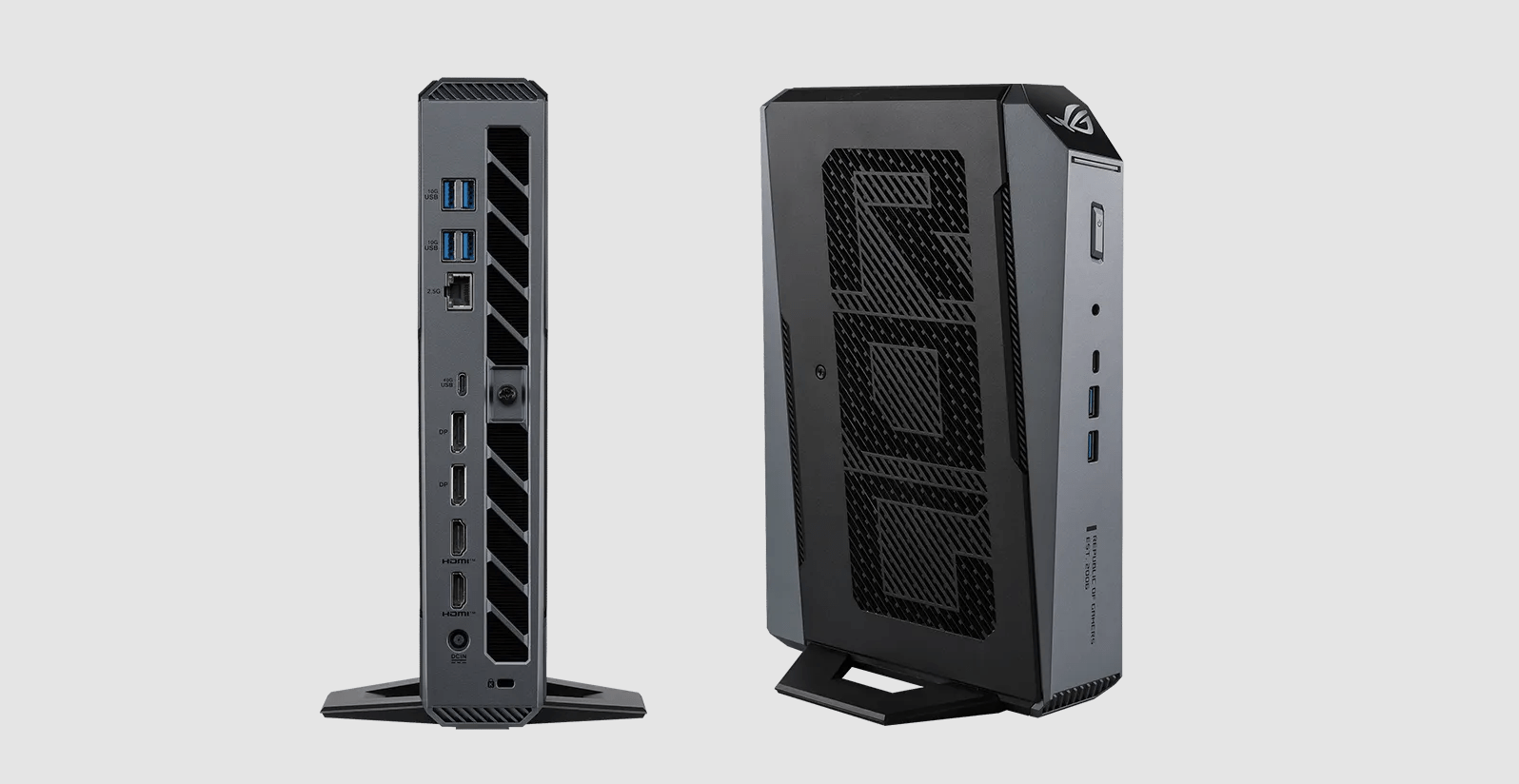
In terms of connectivity, you get a USB-C 3.2 and USB-A 3.2 ports on the front, along with another USB-A 3.2 port, two HDMI ports, two DisplayPorts and a USB-C 4.0 port on the back. The rear USB-C ports can also act as another DisplayPort. This little box has enough grunt to drive a couple of displays without raising a sweat, so the port allocation is generous. ASUS claims that it can drive five 4K displays simultaneously. We didn’t have the opportunity to put that claim to the test, but suspect that might be a little ambitious.
There’s also a LAN port supporting up to 2.5 gigabit per second wired networking, or you can use Wi-Fi 7.
And all of this in a typically stylish ROG box that fits comfortably on your desktop.
Speaking of working up a sweat, heat is obviously an issue in any gaming rig, and some gamers have incredibly sophisticated solutions for keeping their machines from melting. The GR70 offers ASUS’s “Quietflow” system, with three fans that work independently or in tandem to keep things cool, and noise suppression technology to keep the fans from getting too noisy. In our testing we didn’t encounter either excessive heat or unacceptable levels of fan noise, so that must be doing something right.

The machine also comes with ASUS’s ROG BIOS, software that allows the user to customise performance settings (including overclocking the CPU) to their specific needs. You can allow the machine to optimise automatically, or fiddle the settings yourself if you know what you’re doing. Helpfully, it also offers presets for commonly used applications and specific games, so that the machine uses its resources most efficiently for what you’re actually doing.
It’s a bit difficult to assess how effective this actually is, but its existence at least acknowledges that different games stress different components of the system, and powering things down when not needed should keep the heat under control.
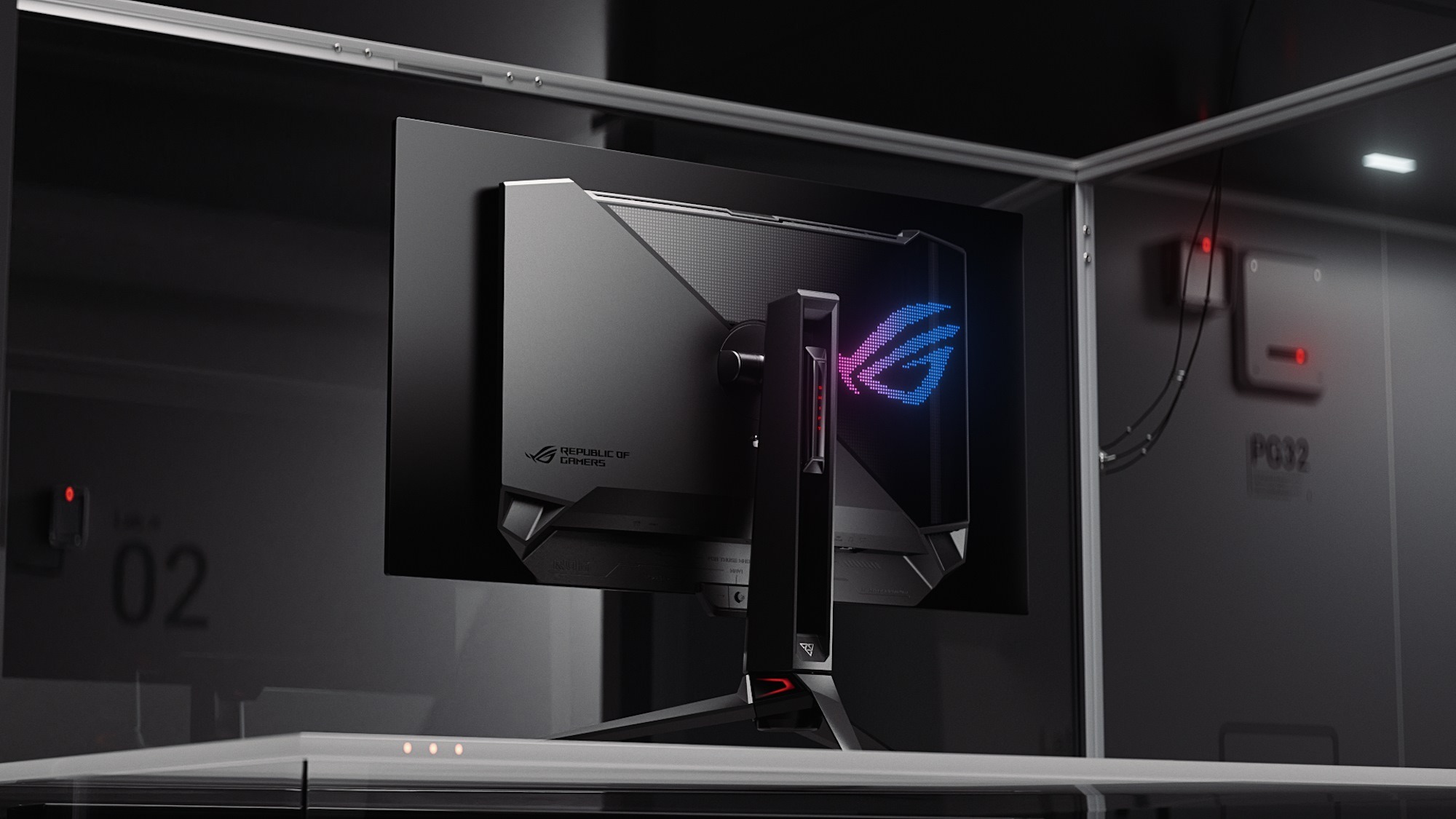
The customisation software also includes a tool called Aura Sync, which enables you to coordinate the colour of the illuminated ROG logo on this machine and any compatible devices you might have attached. As it so happened we were testing a ROG display at the time, and Aura Sync enabled some fun light-show effects to play back and forth between the two devices. It’s an entirely silly feature, but sometimes silly is good.
The GR70 won’t satisfy the most framerate-hungry every-polygon-counts level of high-end gamers, but it absolutely has a niche. Gamers who want more than they can get out of a standard mini-PC or gaming laptop, but would rather not take up more space than a console, will be very well served by this neat little box.
Score: 8.5/10
Pros:
- Desktop-class performance in a compact form factor
- Strong combo of Ryzen 9 CPU and RTX 5070 GPU
- Easy upgradeability (RAM and storage)
- Excellent connectivity and multi-display support
Cons:
- Not for ultra-hardcore, maxed-out gaming purists
- 8GB VRAM may limit future-proofing at high settings
- Multi-4K display claim feels optimistic