

Peloton have decided to revamp its mobile fitness app, adding in three different tiers, including an upscale version, that will cost approximately $35 a month or $350 a year.
A free version will also be available excluding the live fitness classes. On what has been renamed Peloton App One, these fitness classes will be available for approximately $16.99 a month or $169 a year.
The company also has plans to introduce a strength-training feature, available on all three tiers.
This comes as an attempt for the company to sell less hardware, including the popular stationary bike. The app will be able to deliver many fitness classes, hoping to attract customers who may not be able to afford the equipment.

It also wants to prove Peloton is an experience users can take anywhere, not just in the home.
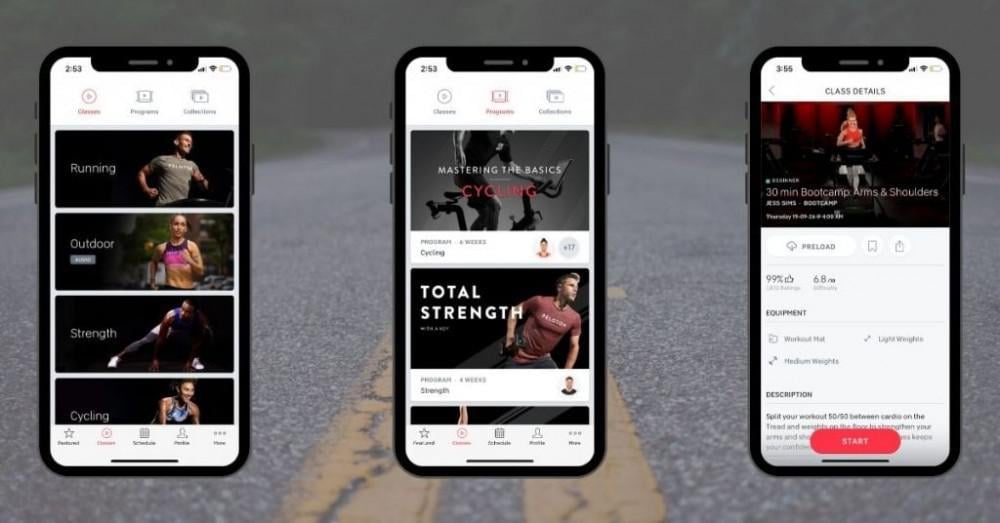
This app allows users to take online fitness classes via smartphones, TVs, tablets and the web. It offers rowing, running, cycling, yoga and other categories, having to compete alongside Apple’s Fitness+ and iFit, along with other training services.
Peloton App Free, will include over 50 classes across 12 fitness categories but no live courses. This was done in the hope to lure customers with the free tier before urging some to upgrade. It is absolutely free to download.
Peloton App One, includes thousands of classes, but limits users to three classes a month that require hardware equipment.
Peloton App+, offers unlimited hardware-based classes.

These new apps will be launched in the US, Canada, Australia, Germany and the UK.
These services, however are not a substitute for the regular subscription allowing users to get content directly on their bikes.
The all-access plan still cost $44 a month, and is required to run classes on Peloton home equipment which includes, bikes, treadmills, rowing machines, and the Guide TV device.
Peloton Gym is the new strength-training service that will offer workouts and video tutorials for exercising different parts of the body.
It will be able to detail which areas were targeted and use an external heart rate sensor to gauge the number of calories burned.
Peloton is bringing in more revenue from subscribers than hardware, with services much more affordable and profitable for the company.
Peloton earned almost $290 million just from subscribers last quarter, losing $17 million in hardware.
However, the company has also been losing subscribers, numbers dropping 13% last quarter compared to last year.



















